School Zone Safety Tips Every Driver Should Know
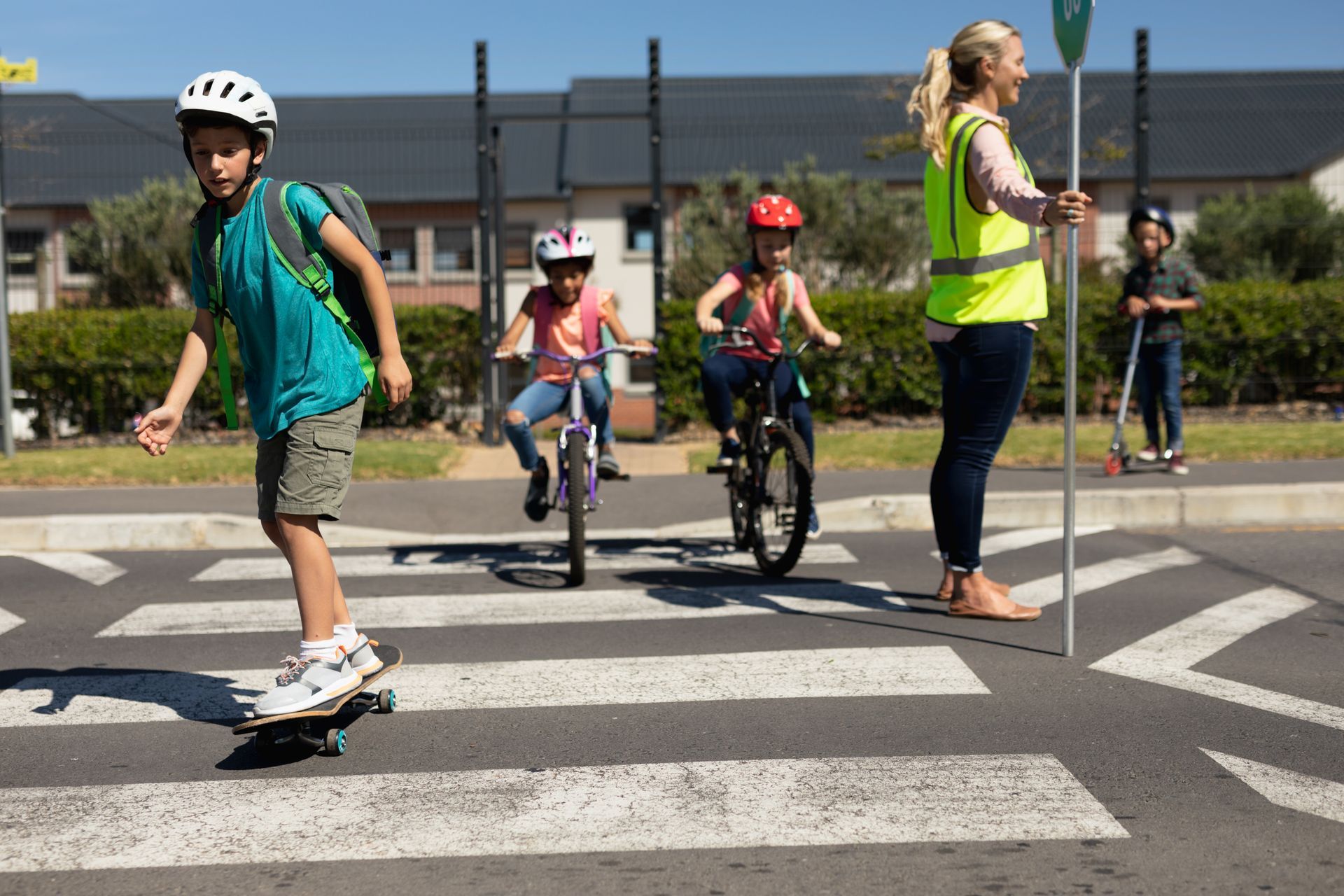
When school starts, Arizona roads become busier with school buses, parents, pedestrians, bicyclists, and young drivers.
Morning drop-off and afternoon pickup can create especially busy conditions around schools. Children may cross streets, walk between parked vehicles, or ride bicycles through areas where drivers are also trying to navigate traffic.
For drivers, school zone safety comes down to slowing down, staying alert, following posted signs, and expecting children to behave unpredictably.
A few extra seconds of caution can help reduce the risk of a serious accident.
Slow Down When Approaching a School Zone
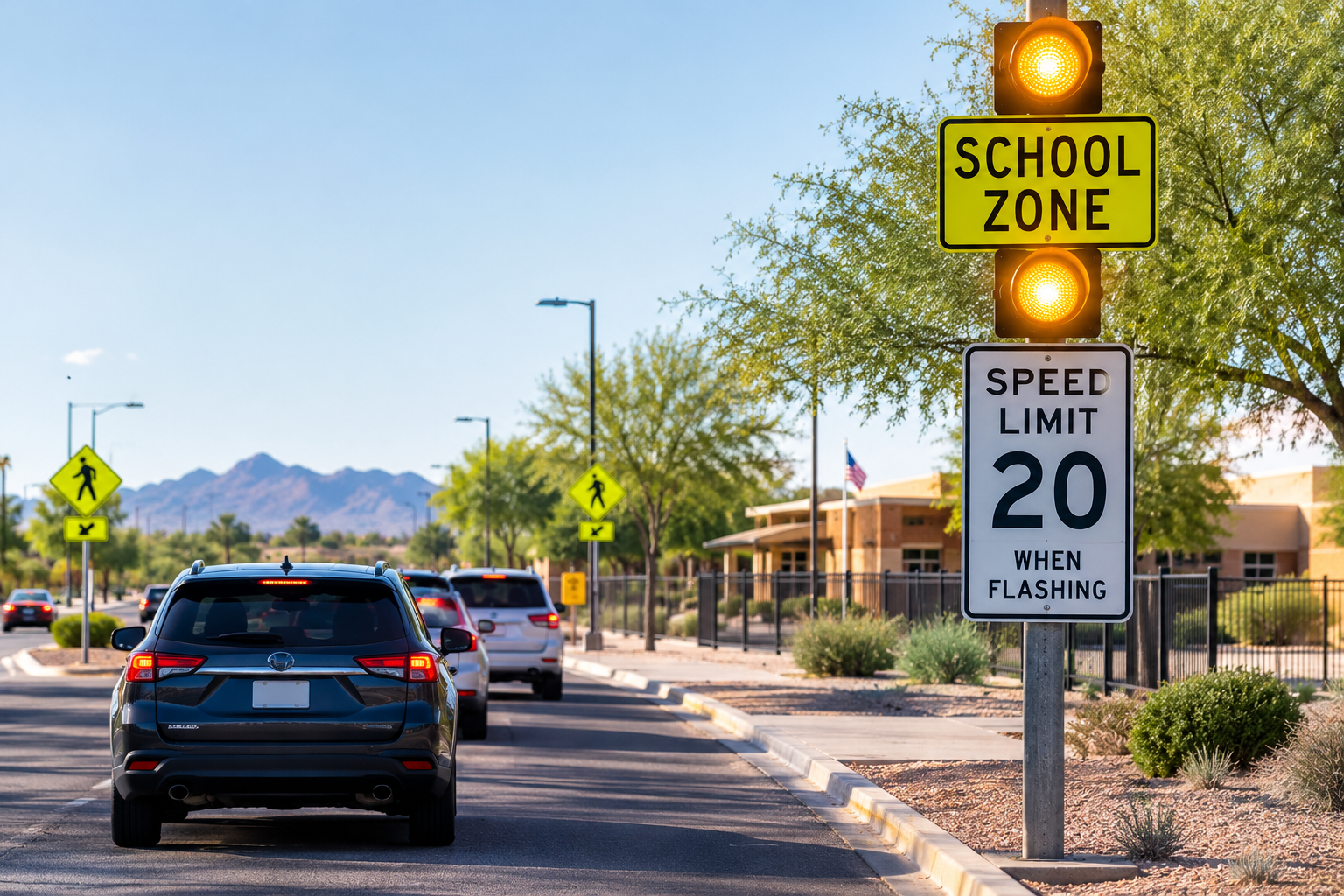
One of the most important school zone safety rules is also one of the simplest: slow down. Arizona law establishes a 15 mph standard when approaching a school crossing, unless a different authorized speed applies. Arizona law also requires drivers to operate at a reasonable and prudent speed based on existing conditions and potential hazards.
Pay attention to:
- School zone signs
- Reduced speed limit signs
- Flashing lights
- Portable school crossing signs
- Crossing guards
- Children near the roadway
Don't wait until you're directly beside the school to slow down. Begin adjusting your speed as you approach the school zone.
Give Pedestrians Your Full Attention
Children walking to school may not always behave the way an experienced adult pedestrian would.
A child may:
- Run toward a crosswalk
- Step out from behind a parked vehicle
- Become distracted
- Suddenly change direction
- Ride a bicycle into an intersection
Drivers should scan the entire area rather than focusing only on the vehicle directly ahead.
At signalized intersections, Arizona law requires vehicles to yield to pedestrians lawfully within an adjacent crosswalk.
For more information about pedestrian-related collisions, visit our Pedestrian Accidents resource page.
Never Pass Another Vehicle Stopped for a Crosswalk
A vehicle stopped near a crosswalk may be stopped for a child or another pedestrian that you cannot see.
Passing that vehicle can put someone crossing the street directly in your path.
In Arizona's designated school crossings, the law also prohibits vehicles from exceeding 15 mph and addresses no-passing requirements when the required portable school signs are in place.
When another driver stops near a school crossing, slow down and determine why before proceeding.
Stop for School Buses
School buses make frequent stops during morning and afternoon routes.
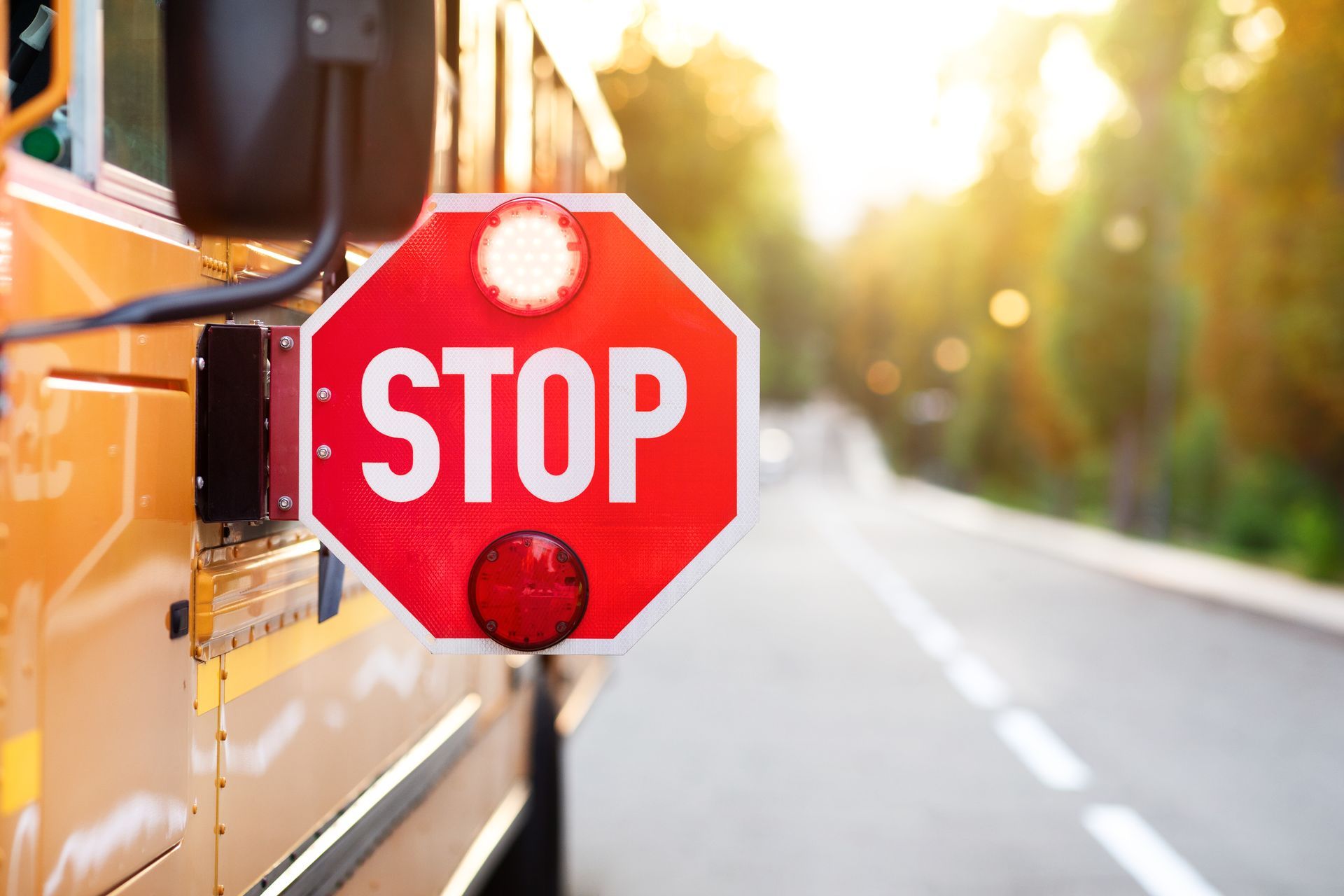
When a school bus is stopped with its stop sign arm extended and flashing signals operating, drivers need to stop as required by Arizona law and remain stopped until the bus resumes motion or the signals are no longer displayed.
On roadways with separate roadways, there are specific circumstances in which traffic traveling on the opposite roadway does not have to stop.
The safest approach is simple: never assume you can drive past a stopped school bus.
Wait and make sure you are legally permitted to proceed.
Watch for Children Around Parked Cars
One of the biggest challenges in school zones is visibility.
A child walking between parked vehicles can be difficult to see until they are already close to the roadway.
Be particularly careful around:
- School parking lots
- Residential streets near schools
- Drop-off lanes
- Pickup areas
- Apartment complexes near schools
Reduce your speed and scan between parked vehicles for pedestrians and bicyclists.
Put Your Phone Away
School zones aren't the place for multitasking.
Avoid:
- Texting
- Reading notifications
- Adjusting social media
- Holding your phone
- Entering information into your GPS while moving
Even a brief distraction can cause you to miss a pedestrian, bicyclist, stopped vehicle, or changing traffic signal.
If you need to use your phone, pull over somewhere safe first.
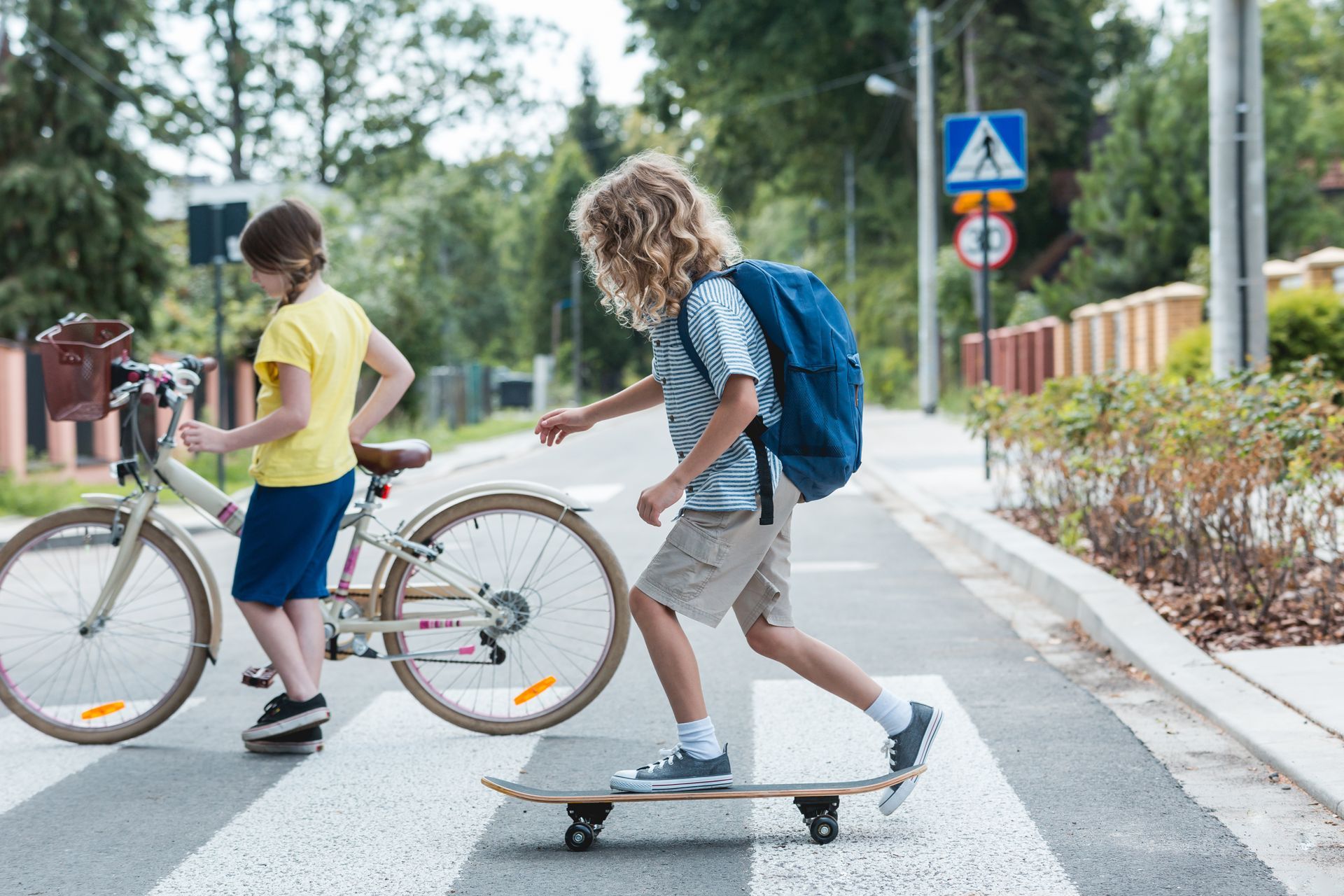
Watch for Students on Bicycles
School zones aren't just busy with pedestrians.
Many students ride bicycles to and from school.
Drivers should watch carefully for cyclists approaching:
- Intersections
- Driveways
- Crosswalks
- Bike lanes
- School entrances
Give bicyclists appropriate space and check carefully before turning or changing lanes.
You can learn more about bicycle-related collisions on our Bicycle Accidents resource page.
Be Extra Careful During Morning and Afternoon Hours
School-related traffic doesn't happen all day.
The periods around school arrival and dismissal can bring more pedestrians, buses, bicycles, and vehicles into the same area.
If you regularly drive near a school, consider adjusting your route or allowing additional travel time during these periods.
This can help you avoid rushing through congested areas.
🌵 Arizona Safety Tip
Don't assume every school zone looks the same.
Arizona's official traffic guidance includes several different school-related signs and configurations. Some crossings use portable signs and specific school-crossing markings.
Pay attention to the signs and markings actually present at the school you're approaching rather than assuming the rules look identical at every location.
What If a School Zone Accident Happens?
Even careful drivers can become involved in an accident.
If a collision occurs:
- Stop and check for injuries.
- Call 911 when emergency assistance is needed.
- Move to a safe location if possible.
- Exchange information with the other driver.
- Document the scene when it is safe.
- Follow up about any injuries.
Children may be particularly vulnerable to serious injuries in pedestrian and vehicle collisions, so seek appropriate medical attention after an accident.
For additional guidance, read our What to Do After a Summer Accident (Step-by-Step) article.
School Zone Safety Is
Everyone's Responsibility
Drivers aren't the only people using school zones.
Students, parents, crossing guards, school employees, bicyclists, and bus drivers all share these spaces.
Drivers can help make school areas safer by:
- Slowing down
- Watching for pedestrians
- Following school crossing signs
- Stopping for buses when required
- Avoiding distractions
- Allowing extra time
- Remaining patient
The goal isn't simply to get through a school zone as quickly as possible. It's to get everyone through it safely.
Back-to-school season changes the way many Arizona roads operate.
More school buses, pedestrians, bicyclists, parents, and young drivers can mean more activity around schools during the morning and afternoon. Slowing down, watching carefully, following school-crossing signs, and eliminating distractions can help drivers respond when something unexpected happens.
School zone safety starts with paying attention before a dangerous situation develops.
Need Help After an Accident?
If you or someone you care about has been involved in a school zone accident, Call Christina Now can provide guidance and connect you with trusted medical, legal, and recovery resources.