Why Tire Blowouts Are More Common During Arizona Summers

Arizona Heat Can Put
Extra Stress on Your Tires
Arizona summers are hard on vehicles, and tires are especially vulnerable to extreme heat. When temperatures climb into the triple digits, tires face a combination of high air temperatures, hot pavement, highway speeds, and long driving distances. Heat alone does not mean a tire will suddenly blow out, but it can increase stress on a tire that is already underinflated, worn, damaged, overloaded, or aging.
A tire failure at highway speed can be frightening and may cause a driver to suddenly lose control. Understanding why tire problems become a greater concern during Arizona summers—and knowing what to check before driving—can help reduce the risk of a dangerous roadside emergency.
Why Does Summer Heat Increase the Risk of a Tire Blowout?
Tires naturally generate heat as they flex and move against the roadway.
During an Arizona summer, they also have to handle extremely hot outside temperatures and pavement. Sustained high temperatures can contribute to tire deterioration, which may eventually lead to problems such as tread separation or blowouts.
The risk becomes greater when a tire already has another problem, such as:
- Improper inflation
- Worn tread
- Cracks or other damage
- Excessive age
- Heavy vehicle loads
- Previous tire damage
This is why checking your tires becomes especially important before summer travel.
If you'd like to learn more about how high temperatures affect other parts of your vehicle, read our guide, How Heat Can Affect Your Car—and Increase Accident Risks.
Underinflated Tires Can Be Especially Dangerous
One of the most important things Arizona drivers can monitor is tire pressure. According to the National Highway Traffic Safety Administration, underinflation is the leading cause of tire failure.
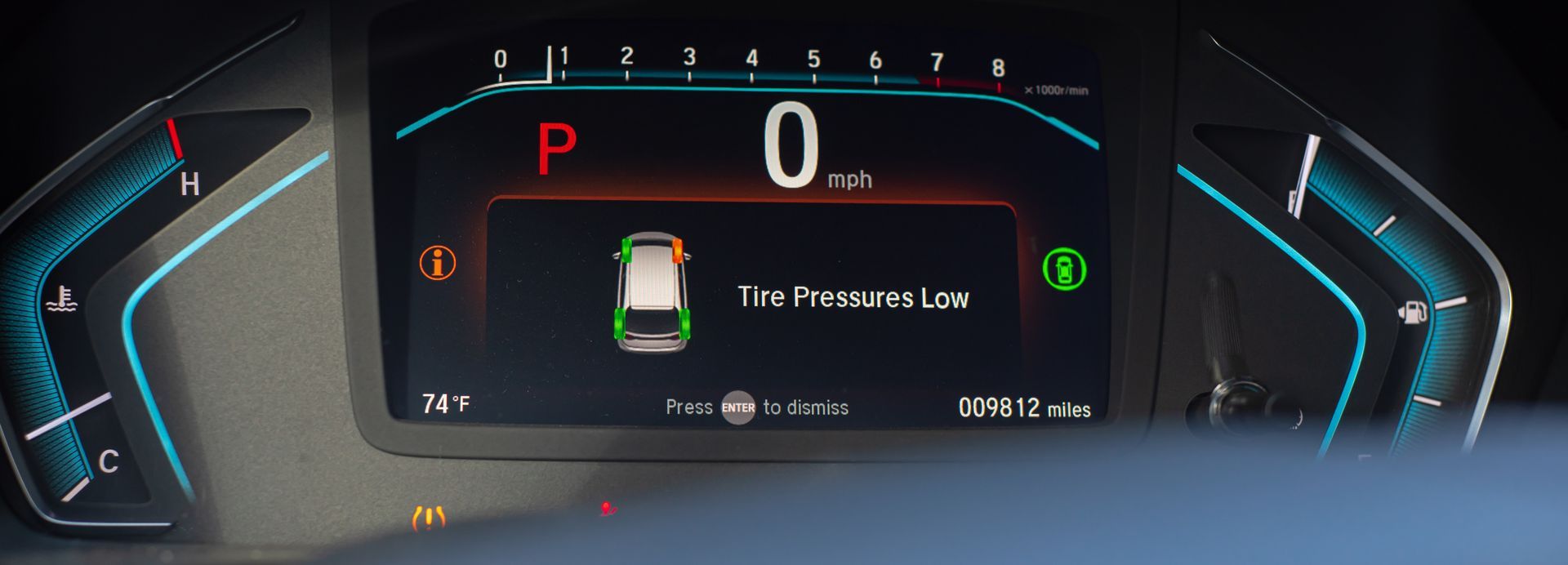
An underinflated tire flexes more while the vehicle is moving. That additional flex creates heat inside the tire. Combine that with Arizona's summer temperatures and hot pavement, and the tire may experience even greater stress. Do not rely only on your vehicle's tire-pressure warning light. Checking your tire pressure regularly can help you identify a problem before it becomes more serious.
🌵 Arizona Safety Tip
*Check your tire pressure before driving, when your tires are cold,
rather than immediately after traveling on hot Arizona roads.
*Use the pressure recommended by your vehicle manufacturer—not the maximum pressure printed on the tire itself.
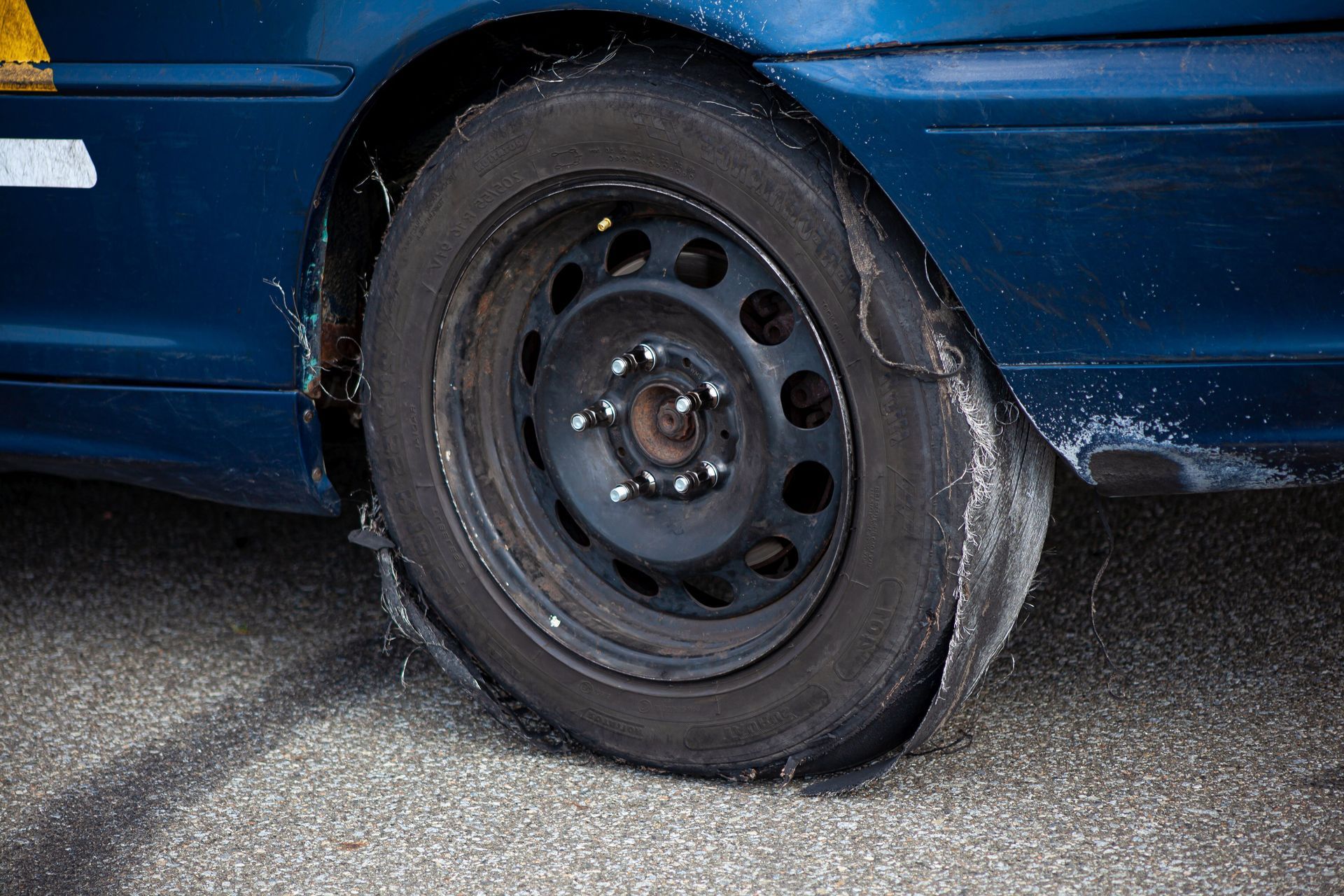
*Inspect your tires before long trips and never ignore cracks, bulges, uneven wear, or other visible damage.
Worn or Damaged Tires
Can Make the Problem Worse
Proper tire pressure is only part of summer tire safety. Drivers should also inspect the tread and sidewalls for signs of damage.
Watch for:
- Cracks
- Cuts
- Bulges
- Uneven tread wear
- Objects embedded in the tire
- Unusually low tread
A tire that already has structural damage may be less capable of handling the additional demands of high-speed summer driving.
If you are unsure about the condition of a tire, having it inspected before a long drive can be safer than waiting for a problem to develop on the highway.
Long Summer Road Trips
Can Add More Stress
Arizona summers are also a popular time for road trips. Long periods of highway driving mean tires remain in motion for extended periods, generating additional heat. Before leaving for a road trip, inspect all four tires and your spare if your vehicle has one. Check pressure, tread condition, and visible signs of damage.
Our Road Trip Safety Tips: How to Stay Safe on Long Drives guide includes additional ways to prepare yourself and your vehicle before summer travel.
Tire Safety Matters During Monsoon Season Too
Summer heat is not the only reason to pay attention to your tires.
Arizona's monsoon season can bring sudden heavy rain and standing water. Tire condition plays an important role in maintaining traction on wet roads. Worn tires can make already challenging road conditions even more difficult to navigate.
For more information about driving through summer storms, visit Arizona Monsoon Driving Safety: How Rain, Dust Storms, and Flash Floods Increase Accident Risks.
What Are the Warning Signs of a Tire Problem?
Not every tire failure happens without warning.
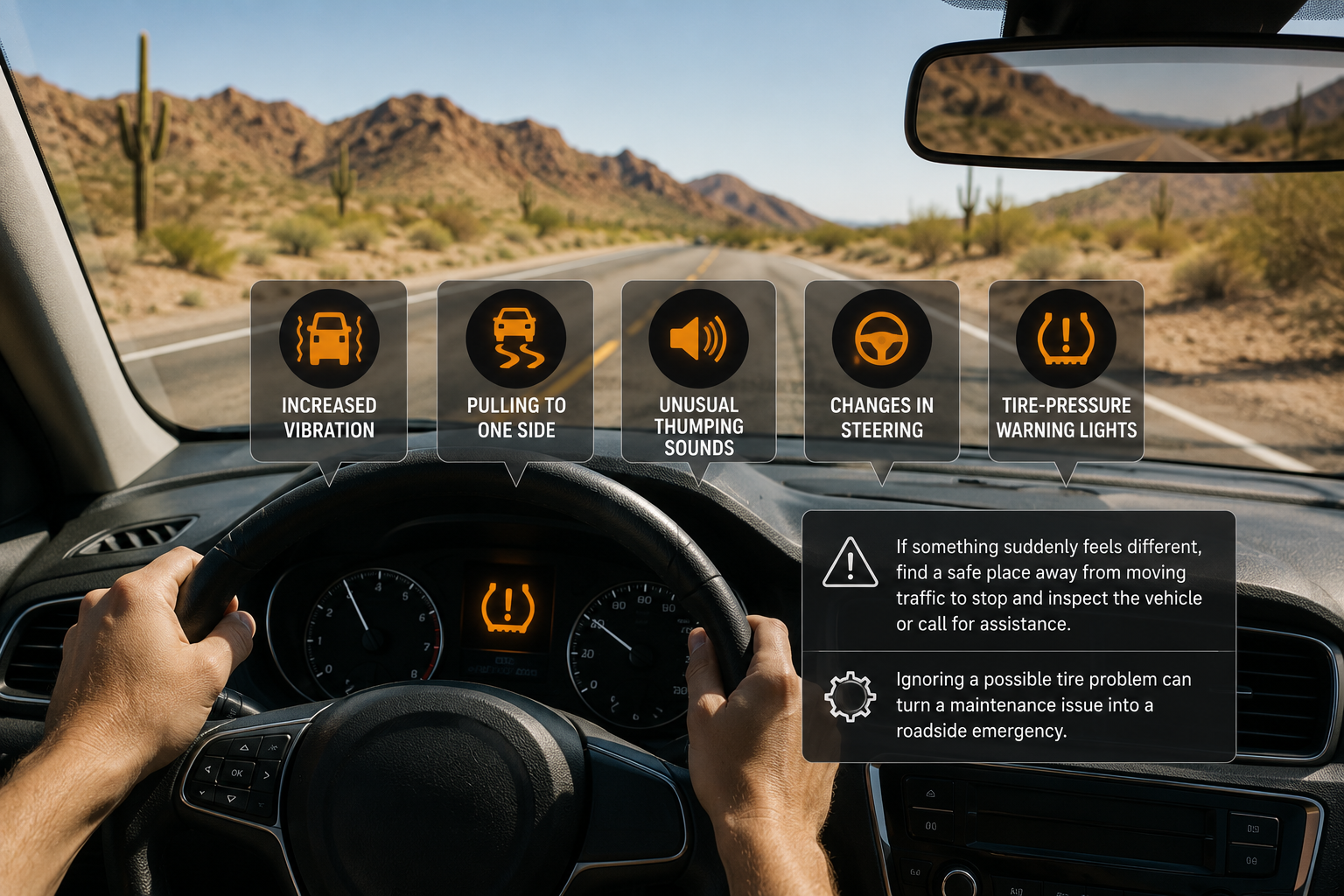
While driving, pay attention to unusual changes such as:
- Increased vibration
- Pulling to one side
- Unusual thumping sounds
- Changes in steering
- Tire-pressure warning lights
If something suddenly feels different, find a safe place away from moving traffic to stop and inspect the vehicle or call for assistance.
Ignoring a possible tire problem can turn a maintenance issue into a roadside emergency.
What Should You Do
If a Tire Blows Out While Driving?
A sudden tire blowout can be startling, but your reaction matters.
If a tire fails while you're driving:
- Stay calm and maintain control of the steering wheel.
- Avoid slamming on the brakes.
- Allow the vehicle to gradually slow down.
- Move toward a safe location away from traffic when you are able to do so.
- Turn on your hazard lights.
- Call for roadside assistance if necessary.
Once you're safely stopped, be cautious about exiting your vehicle near moving traffic.
Extreme Arizona temperatures create another concern. Being stranded alongside a highway in triple-digit heat can quickly become dangerous, so keeping drinking water and a charged phone in your vehicle is an important part of summer preparation.
What If a Tire Blowout
Causes an Accident?
A tire blowout can sometimes cause a driver to lose control, leave the roadway, or collide with another vehicle.
If an accident occurs, focus first on safety. Check for injuries and call 911 when emergency assistance is needed. Move to a safer location when possible, document the scene when it is safe to do so, and seek medical evaluation for injuries.
It may also be helpful to photograph the damaged tire and vehicle rather than immediately disposing of the tire, particularly if questions later arise about what caused the failure.
For additional guidance, read What to Do After a Summer Accident (Step-by-Step) or visit our Automobile Accidents resource page.
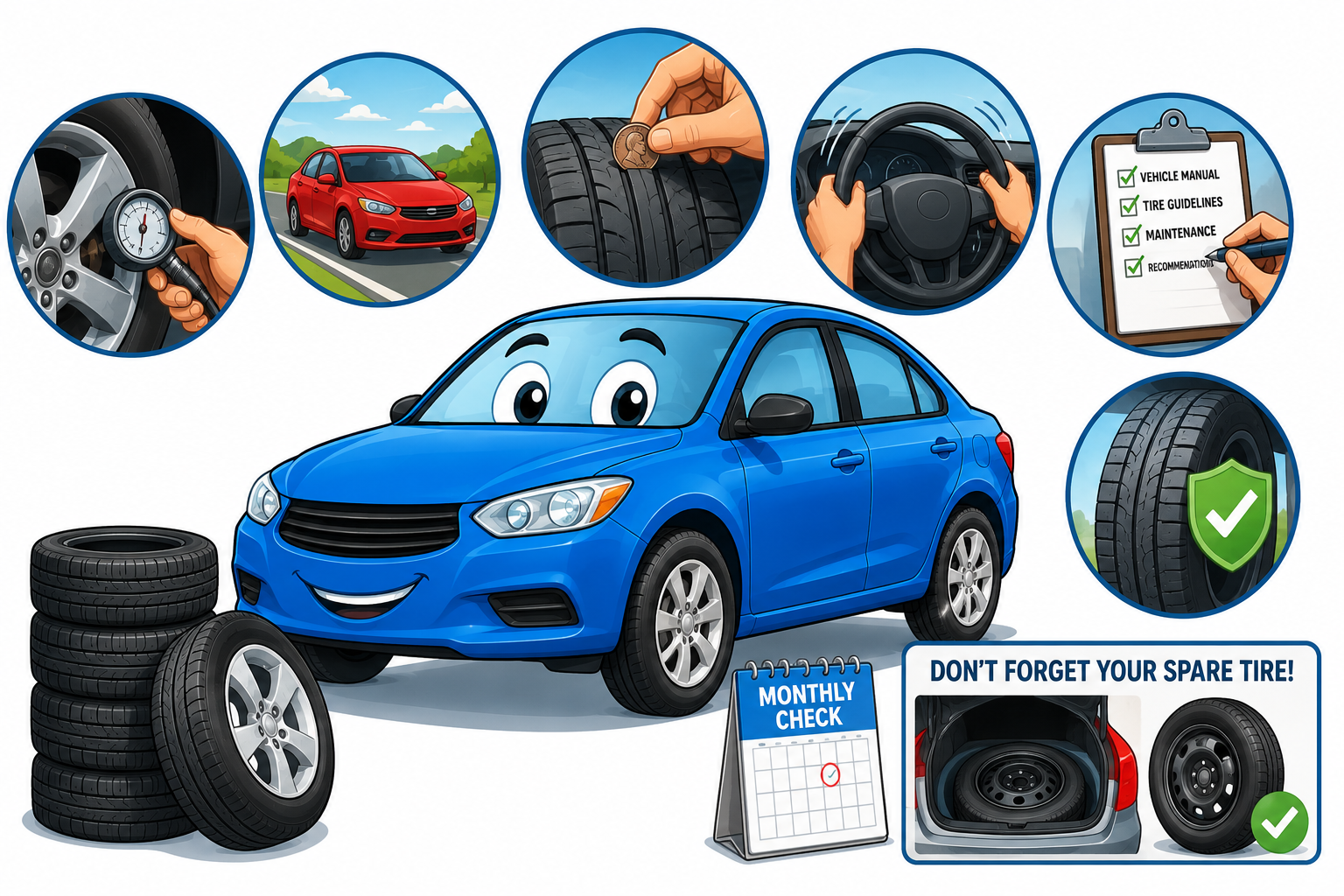
Arizona's extreme summer heat can create demanding conditions for your vehicle's tires.
Hot weather does not automatically cause a blowout, but sustained heat combined with underinflation, wear, damage, heavy loads, or long periods of highway driving can increase the risk of tire failure.
A few minutes spent checking tire pressure and inspecting tire condition before getting on the road can help identify problems early.
During an Arizona summer, preparing your tires isn't just vehicle maintenance. It's an important part of staying safer on the road.
Need Help After an Accident?
If you or someone you care about has been involved in an accident and you're unsure what to do next, Call Christina Now can help provide guidance and connect you with trusted medical, legal, and recovery resources.

Arizona's extreme summer heat can put added stress on your tires. Learn what increases the risk of a blowout, warning signs to watch for, and how to prepare before hitting the road.
This article is part of our Summer Safety & Accident Awareness Series.
Explore more resources to stay safe this season.